
Introduction
Objective comparison between Dubai Islands and Palm Jumeirah focusing on development stage, infrastructure, density and market positioning.
Dubai Islands and Palm Jumeirah are both waterfront developments in Dubai but represent different stages of maturity. Palm Jumeirah is a fully established and stabilized waterfront community, while Dubai Islands is in an early to mid-stage development phase with ongoing infrastructure rollout.
What is the difference between Dubai Islands and Palm Jumeirah?
Palm Jumeirah is a mature, fully developed waterfront community. Dubai Islands is a phased master development still undergoing infrastructure and residential rollout.
Is Dubai Islands more developed than Palm Jumeirah?
No. Palm Jumeirah is significantly more established.
Which project is newer?
Dubai Islands is newer in its current development cycle.
Are both located on man-made islands?
- Yes, both are large-scale coastal reclamation projects.
1. Development Stage Comparison
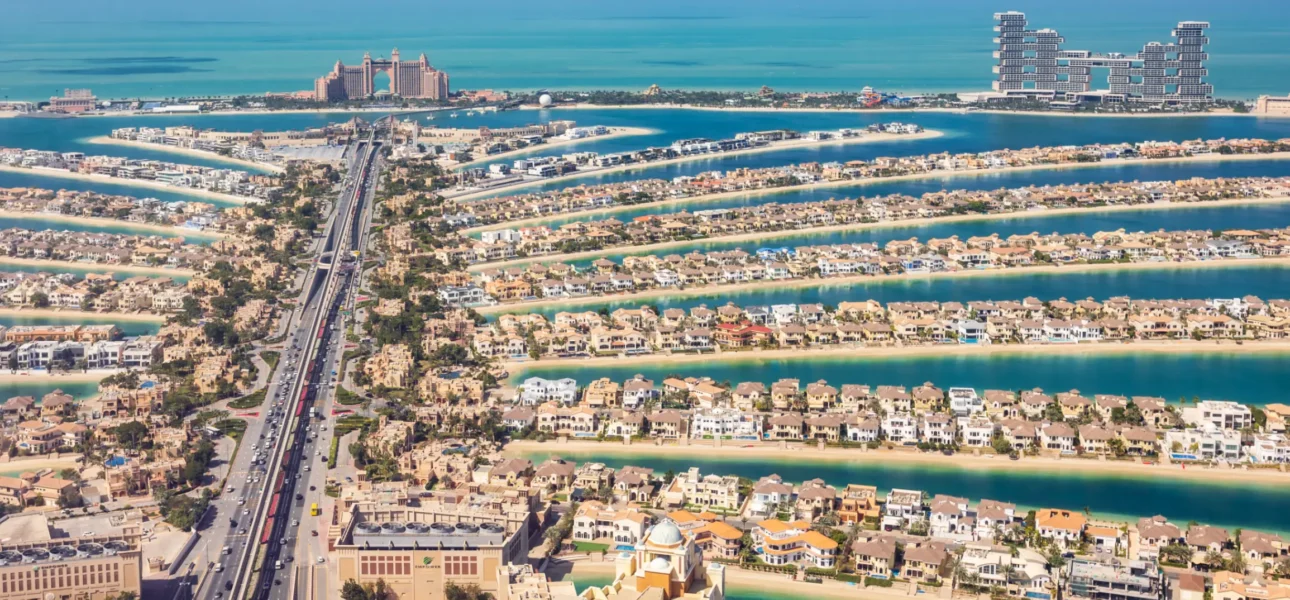
Palm Jumeirah was launched in the early 2000s and is now fully operational with stabilized residential, hospitality and retail infrastructure.
Dubai Islands, by contrast, is currently positioned in an expansion phase. Residential launches and infrastructure components are being delivered progressively.
Development Timeline Contrast:
Dubai Islands: Early–mid expansion phasey occupancy.
Palm Jumeirah: Completed development cycle
2. Infrastructure and Connectivity
Palm Jumeirah benefits from:
- Established road connectivity
- Monorail system
- Fully operational utilities
- Completed marina and retail zones
Dubai Islands currently features:
- Bridge connectivity to Deira
- Phased internal road rollout
- Progressive utility installation
- Developing marina infrastructure
Infrastructure maturity differs significantly.
3. Density and Urban Structure
Palm Jumeirah is structured around:
- Frond villa districts
- Central trunk with mixed-use towers
- Crescent hospitality zone
Dubai Islands follows a multi-island masterplan including:
- Higher-density Central Island
- Lower-density villa-focused islands
- Thematic island differentiation
Urban form and layout logic differ between the two projects.t.
4. Market Phase Position
Palm Jumeirah reflects a stabilized market phase characterized by:
- Established resale market
- Price stability relative to Dubai cycle
- Fully activated community
Dubai Islands reflects:
Infrastructure-dependent stabilizationnfrastructure rollout.
Expansion-stage pricing
Ongoing absorption
Comparative Table
| Factor | Dubai Islands | Palm Jumeirah |
| Launch Era | Repositioned in recent cycle | Early 2000s |
| Development Phase | Early–Mid Expansion | Mature |
| Infrastructure | Rolling Out | Fully Established |
| Density Structure | Multi-island differentiation | Central trunk + fronds |
| Market Stability | Moderate | High |
5. Structural Position Within Dubai
Palm Jumeirah is widely regarded as a flagship, globally recognized waterfront district.
Dubai Islands is positioned as a large-scale coastal expansion increasing Dubai’s waterfront supply capacity.
Both serve different structural roles within Dubai’s long-term urban strategy.
Frequently Asked Questions
Is Palm Jumeirah more stable than Dubai Islands?
Yes, due to its maturity and fully operational infrastructure
Is Dubai Islands comparable to Palm Jumeirah?
They are both waterfront developments but differ significantly in development stage and stabilization
Are property prices similar?
Dubai Islands spans a broader multi-island layout, while Palm Jumeirah follows a single iconic island structure.
Does infrastructure affect property performance?
Palm Jumeirah generally reflects premium stabilized pricing, while Dubai Islands reflects expansion-phase positioning.
Summary
• Palm Jumeirah: Mature and stabilized
• Dubai Islands: Early–mid expansion phase
• Infrastructure maturity differs significantly
• Different structural roles within Dubai’s waterfront strategy
• Different market cycle positioning
Conclusion
Dubai Islands and Palm Jumeirah represent two different stages within Dubai’s waterfront development cycle. Their structural differences reflect variations in infrastructure maturity, density planning and overall market stabilization.